City joins Ocean Rise and Coastal Resilience Coalition to weather impacts of climate change
10 June 2025
On Saturday, 7 June 2025, the City of Cape Town joined other coastal cities around the world as a member of the Ocean Rise and Coastal Resilience Coalition. Alderman Eddie Andrews, Deputy Mayor, and officials from the City’s Coastal Management Department attended the official launch in Nice, France. With a recent study indicating Cape Town’s sea levels rising on average 6mm per year, more than double the world average, the City has a vested interest in knowledge sharing and capacity building, mobilisation and advocacy with cities that are facing the same challenges. Read more below:
The Ocean Rise and Coastal Resilience Coalition unites 1 000 representatives of one billion people who will be affected by rising sea levels by 2050. At the launch in Nice this past weekend, the City of Cape Town also presented our unique challenges, innovative responses, and engaged with experts during workshops.
‘The City has joined this coalition to facilitate our adaptation and resilience to ocean changes. Through this collaboration, we will be able to exchange best practices with other coastal cities, scientific institutions and stakeholders from across the world. All of us who reside in these unique environments are faced with real challenges from erosion and submersion, to extreme climate events that can inflict widespread damage, the degradation of our local ecosystems and significant economic and social repercussions as a result,’ said Alderman Andrews, who is also the City’s Mayoral Committee for Spatial Planning and Environment.
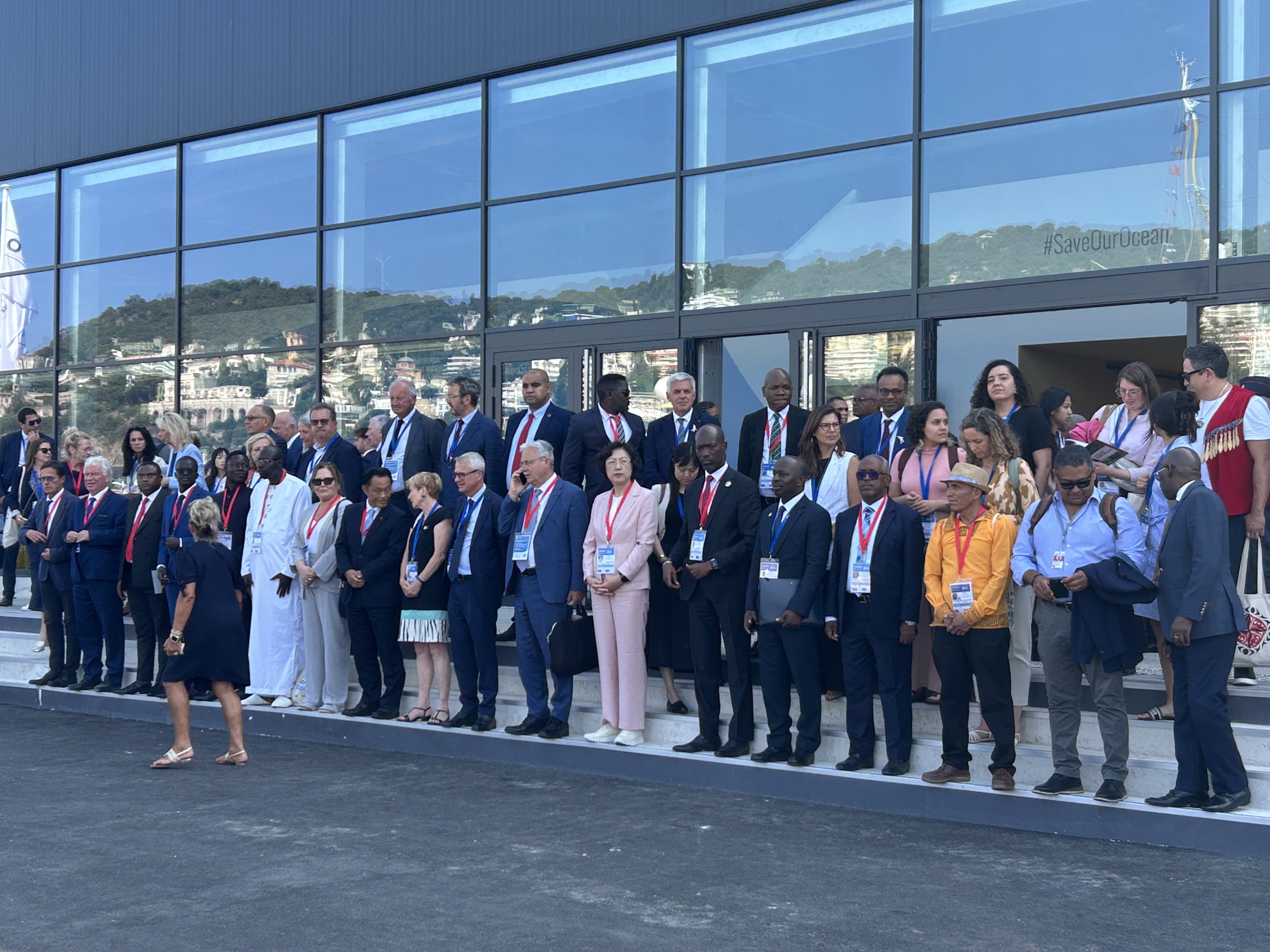
Ald. Andrews participated in a discussion about justice and equity in the midst of dealing with the challenges climate change poses to coastal cities.
The economic value of Cape Town’s coastal environment is estimated at 10% of its annual GDP. Given the economic importance the coastline provides to Cape Town communities, and its value in promoting social redress, it is imperative that the City both optimises the socio-economic potential of our coastline while simultaneously building coastal resilience into the future.
‘The Coalition offers significant potential for reciprocal learning across various cities to manage and respond to these pressures and provides an opportunity to collaborate with other cities facing similar pressures,’ said Alderman Andrews.
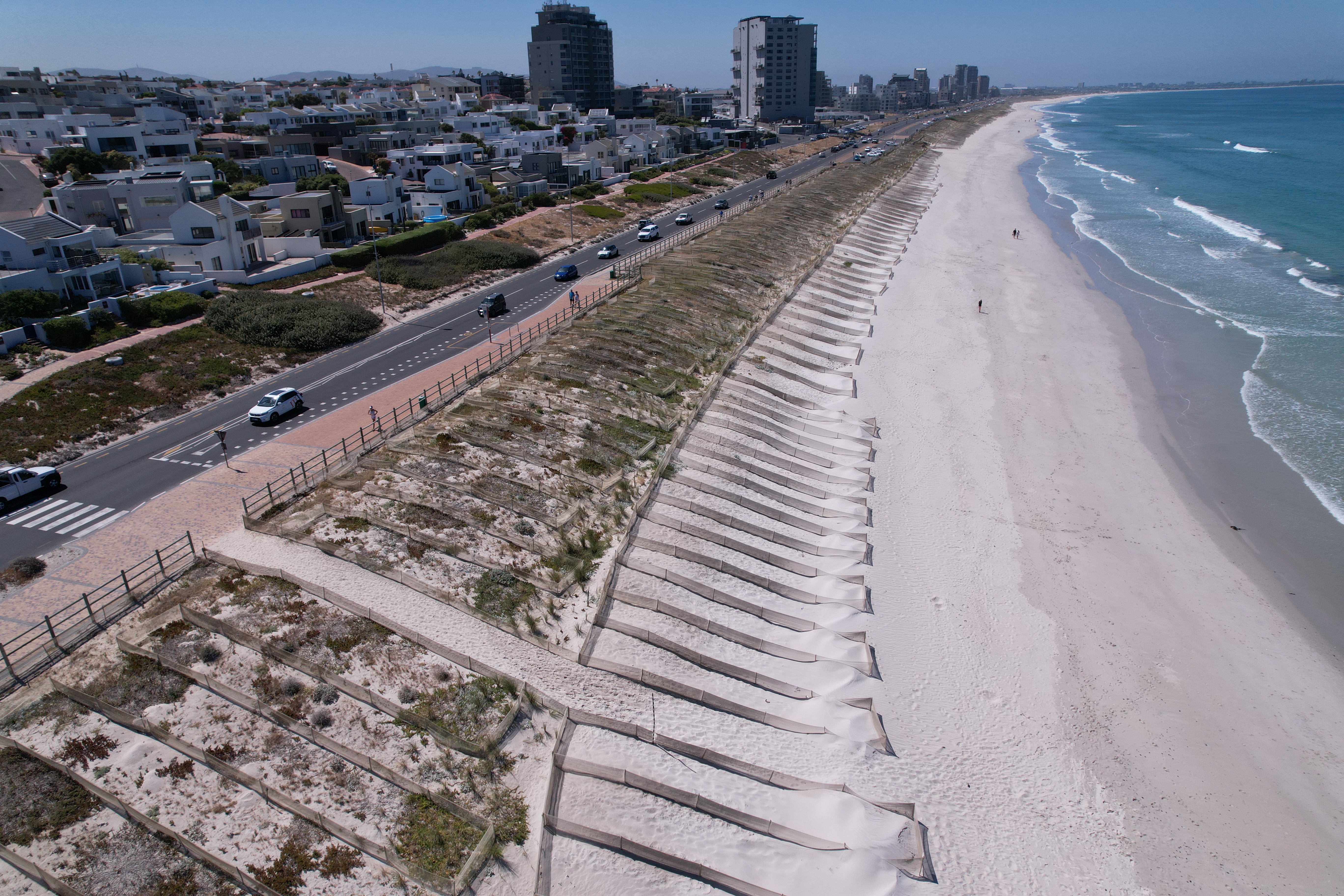
Key risks to the City include the following:
· Increasing demands on the fiscus due to escalating capital and operational expenditure on protecting and maintaining City infrastructure and public amenities through establishing and maintaining shoreline defence initiatives, such as sea walls, revetments and nature based solutions such as dune rehabilitation projects
· Increasing exposure of private property to coastal hazards and the elevated potential for mal-adaptive impacts across the broader community
· Incremental growth in the ‘hard edging’ of Cape Town’s coastal environment and the associated impacts on beach environments
· Increasing impact and gradual loss of beaches over time in particular where the beaches are adjacent to the immovable built environment
As such, the City has developed a range of principles, strategies and programmes to protect and optimise the value of Cape Town’s coastline to ensure social redress remains central to this process.
Some of these programmes and initiatives include the following:
· Capacity building – the City’s Coastal Management Branch has a wealth of expertise from coastal legislation and planning, to coastal engineering, coastal climate risk, adaptation and governance, conservation, and marine science
· High resolution coastal hazard mapping and adaptation responses – the City has partnered with the French Development Agency (AFD) and is undertaking a high resolution coastal modelling study to better understand and predict coastal risks in Cape Town. This is a critical intervention for the City, which will enable risk averse decision making
· Development of a coastal edge and its inclusion in the Municipal Spatial Development Framework (MSDF) – the outcomes of the hazard mapping and coastal adaptation study will be incorporated into the next review and update of the MSDF. The hazards will be spatially demarcated by the City’s coastal edge. The intention of the coastal edge is to promote risk averse decision making as it relates to coastal land use and development applications
· Development of regulations in the Coastal Bylaw to better manage and guide the construction of sea defence structures for private properties
· Establishing a long-term capital programme guided by multi-criteria decision matrices. The current coastal hazard assessment which is presently being conducted with the support of the French Development Agency will provide key information about the actual severity of coastal hazards to be incorporated into all the City’s risk matrices along the False Bay coastline. The high resolution modelling will be key towards increasing the accuracy of the City’s vulnerability assessments. This will be used to prioritise capital investments along the City’s coastline
· Implementation of nature based solutions such as reinstating a number of vegetated coastal dune cordons. Nature based solutions such as dune rehabilitation projects have shown that its social, environmental and economic benefits typically outweighs hard engineering interventions. Dune rehabilitation projects are the most efficient coastal protection solution, require lower capital investment, have shorter project timelines and retain the ‘sense of place’ value of Cape Town’s coastline
· Kelp management plan – kelp is critical for coastal resilience and the City has developed a kelp management plan that is designed to harness its benefits to sustain the ecological integrity of the coastal environment. Kelp introduces nutrients, traps windblown sand and encourages the establishment of embryo dunes which assist in mitigating coastal erosion
‘As much as coastal cities are facing the same risks, the truth is that each city will have to develop its own solutions best suitable to its unique socio-economic and environmental context. We will have to find a balance between solutions that are prescribed at a global level with an implementation regime that is responsive to our limitations and context,’ said Alderman Andrews.
End
Published by:
City of Cape Town, Media Office